
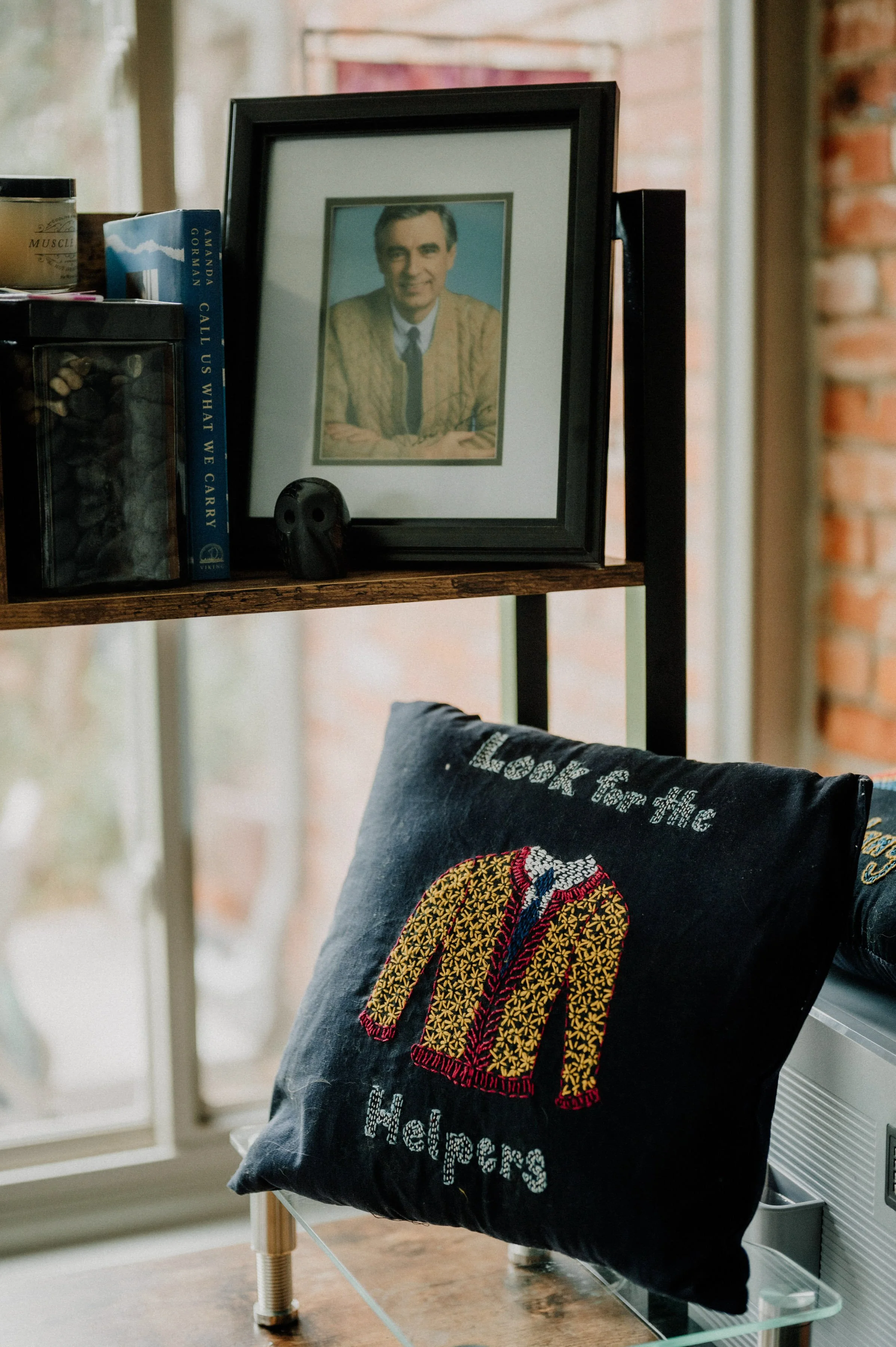
“When I was a boy and I would see scary things in the news, my mother would say to me, "Look for the helpers. You will always find people who are helping.”
―Fred Rogers
Mister Rogers’ words have gotten a lot of airtime in recent years as his life’s work has enjoyed a kind of renaissance.
(For the record, I have always been a Mister Rogers super fan and I have the autographed photo of him to prove it!)
While his words about looking for helpers are both true and useful, they have come to be almost a cliché in recent years, when disaster after disaster leaves us looking around frantically to find the helpers in our current crisis. Only very recently has any attention been drawn to the fact that society’s helpers are getting pretty worn out.

Who’s Helping the Helpers?
As my practice has evolved, I’ve found myself drawn more and more to work with others in helping professions. Over the years I have become increasingly interested in working with physicians, nurses, and other medical providers, educators, activists, therapists, and faith leaders to recover from the burnout that plagues our professions. Often, as a helper, you find yourself:
Being terrified of making mistakes, facing stakes that are unrealistic or realistically very high, or feeling that you’re worthless unless you’re perfect
Falling apart in your own life or feeling broken by grief for the world and the enormity of the challenges in life. Not knowing how to be there in your work or how to metabolize your own suffering so that you can still do good work with patients, clients, or students
Working in systems that are inherently unjust and realizing that you can’t fix it; you can’t help everyone, and people will yell at you and blame you (and you’ll sometimes blame yourself) for the limitations of your literal humanity or for actual mistakes you make that are normal but costly or harmful.
Realizing that your own trauma keeps coming up in your work and is making you burned out and demoralized, with seemingly no way through it
All of us in these fields come to this work by way of our own painful experiences, including our trauma.
It’s essential to understand how that pain shows up in our work lives both in adaptive ways that enhance that work and in ways that contribute to our feeling exhausted, demoralized, and ineffective.
In therapy with people who work with people, we explore the dynamics that shaped you into someone deeply committed to others. We’ll consider how those dynamics are serving you — or not serving you — today, and how you might renegotiate your relationship with what once motivated you.
Burnout is endemic, and looming shortages have become immediate crises as people leave helping professions for less intense and more lucrative jobs.
If you went into this kind of work because you’re passionate about it, I want to help you stay in your chosen field in an emotionally sustainable way. Invest in yourself now to cultivate longevity in the crucial work you’ve chosen.
My therapeutic work with helpers and high achievers in these fields focuses on:
Burnout recovery and prevention
Balancing the demands of intense work with a desire to live a whole and fulfilling life outside of work
Building longevity in your career
Expanding deeper and more compassionate self-awareness
Cultivating a grounded, realistic, resilient sense of hope
Developing skills for working through the painful experiences that are part of this work
Creating and appreciating your identity and goodness outside of your role as a helper
I work to create a profoundly safe environment, where all thoughts, feelings, wishes, regrets, and fantasies are welcome and accepted.
Having longevity in a helping career is only possible if our whole selves can be okay, including the selfish and demanding and unfair parts of us.
We don’t have to give those parts the keys to the bus, as it were; but they should have a seat on the bus–no need to keep them bound and gagged in the trunk. Working toward this in therapy involves building the trust to explore our most protected or shut-off selves, inviting them to speak (so they don’t have to scream at us through symptoms like burnout, resentment, meltdowns, depression, panic attacks, etc.), and gradually integrating those into our whole being.
This kind of work produces long-lasting, sustaining wellness – not constant happiness, but a sense that even when bad things happen, even when I make a mistake or hurt another person, I can be okay. I can make repair where I have wounded. I can forgive myself as I learn from my painful experiences.
Helpers tend to come from a history of being validated and attended to and seen when we were helping or when we were calm in a crisis (and often only then). We learn to repress or to shut off the parts of ourselves/self-states that have our own wants and needs, or the parts that feel resentful or used or want to take a break.
Growth into sustainable wellness comes by working with all the parts of us, rather than just what we have learned are the “acceptable” or “good” parts. We can learn so much from the experiences and wishes and feelings we think are unworthy or bad.

Affirming Therapy for Abortion Care Providers
Since 2017, I’ve been part of the Provider Resilience Initiative with the Abortion Care Network, a national organization that supports independent abortion care providers. Together with a team of clinical social workers from all over the country, I have worked with independent abortion care providers and those in provider-adjacent roles throughout the United States to build resilience in an increasingly hostile political landscape.
I’m committed to reproductive justice and to holding a safe space for people to process all their experiences and feelings around reproductive autonomy. No matter what your experience, your story is safe here.
Would you like to know more about the Abortion Care Network?